

How to Strike a Golf Ball: Understanding Contact With Every Club
Ball striking is one of those parts of golf that can feel mysterious when you're learning. Sometimes the ball flies beautifully. Sometimes you hit the ground first, catch the ball thin or barely make contact at all. Understanding what the club is doing at impact — and why that changes between clubs — gives you a better starting point than trying to fix your swing every time a shot goes wrong.
What Does Good Ball Striking Mean?
Good ball striking means making contact that suits the club, the lie and the shot you're trying to play. With an iron from a reasonable lie, that generally means contacting the ball before the club reaches its lowest point and brushes the turf. With a driver, the ball is teed up and the intended contact is different.
The goal isn't to make every club strike the ground in the same way. It's to understand what good contact looks like for the shot in front of you, then learn to recognise the difference between a solid strike and a mishit.
The key idea: don't treat every club or every poor shot as the same problem. Start by understanding the contact you're trying to produce.
What Actually Happens When the Club Meets the Ball?
A golf swing happens quickly, but the result depends on a few important things coming together: where the club meets the ball, how the club is moving, where the club is pointing and what happens when it reaches the ground.
You don't need to understand every detail of impact to become a better ball striker. But it helps to know that a shot isn't simply good or bad because of how hard you swung.
You can swing quickly and make poor contact. You can make a much shorter swing and strike the ball cleanly. The quality of contact and the speed of the swing are related, but they aren't the same thing.
Why Irons Usually Strike the Ball Before the Ground
With a normal iron shot from a reasonable lie, the club should generally meet the ball before reaching the lowest point of its arc. The club then continues down towards the turf and moves through its low point beyond the ball, from the golfer's perspective.
This is why a good iron shot can leave a divot on the target side of where the ball was sitting. The divot isn't the goal in itself. It's a possible sign of where the club reached the ground after contact.
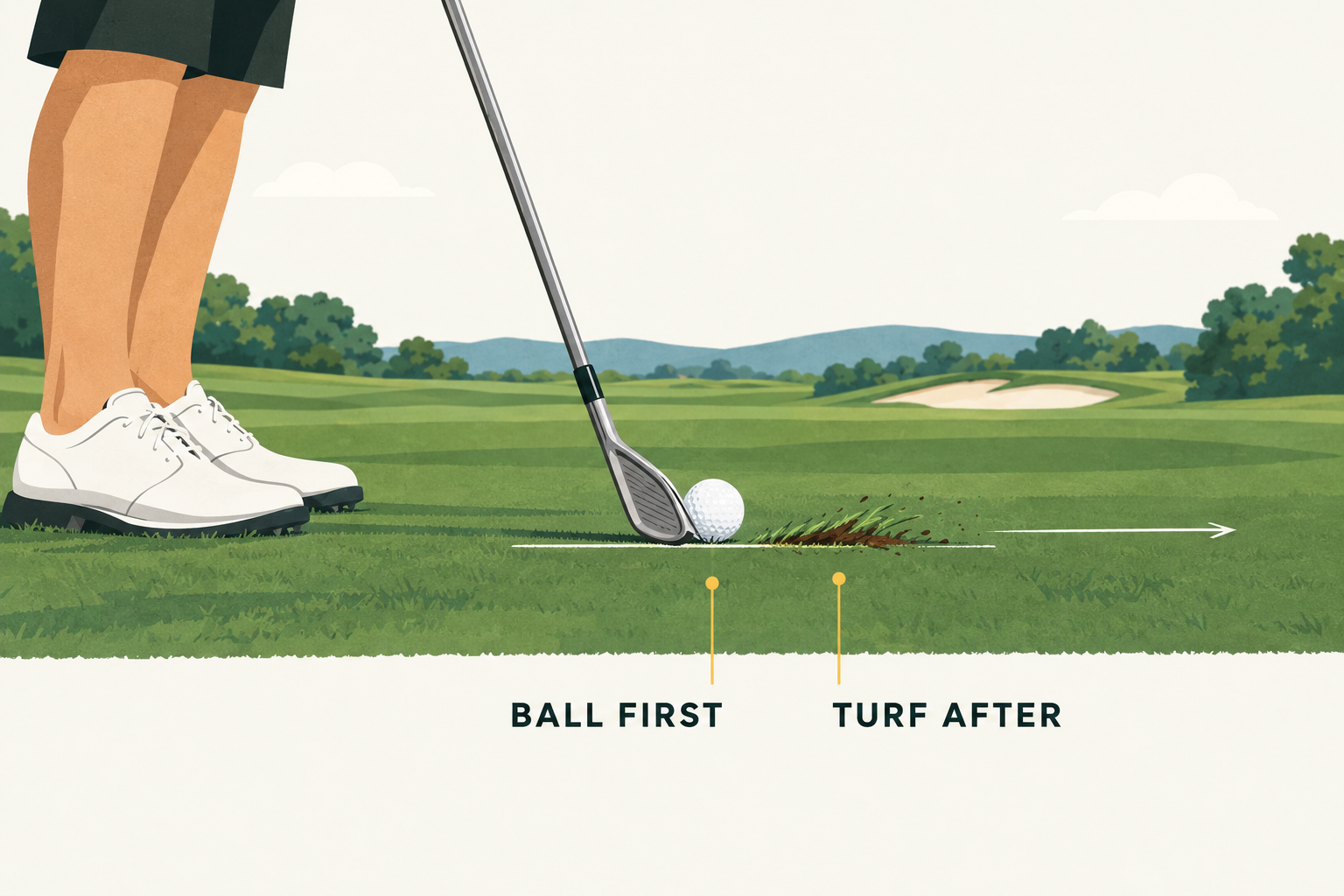
You don't need to dig into the ground or deliberately take a large divot. Depending on the club, the lie and the surface, a good strike might leave a shallow mark or no obvious divot at all.
For an iron, think ball first, then turf — not turf first, and not a deliberate chop into the ground.
What Is the Low Point?
The low point is the lowest point of the club's arc. With a typical iron shot, it should be beyond the ball in the direction of the target. If the club reaches the ground too early, it can hit the turf behind the ball. If the club is too high at the point of contact, you may catch the ball thin or top it.
That's a useful way to understand the difference between these misses, but it isn't a complete diagnosis. Ball position, the lie, the club's delivery and other parts of the swing can all influence the result.
If you'd like to explore the concept in more detail, see our glossary entry on low point in golf.
Good Contact Doesn't Always Mean a Good Shot
You can strike the ball reasonably well and still miss your target. The clubface might send it in the wrong direction, or the strike might produce a trajectory that doesn't suit the shot.
The reverse can happen, too. A mishit can finish close to the target because of a favourable bounce or a bit of luck.
That's why it helps to separate the quality of contact from the final result. Where the ball finishes matters, of course, but it doesn't tell you everything about how you struck it.
Should You Strike Every Club the Same Way?
Not quite. The basic goal is to make useful contact, but the club, the lie and the shot you're trying to play all influence what that contact should look like.
This is where golfers can get into trouble. They learn one description of a good strike — perhaps hitting down on the ball — and then try to apply it to every club in the bag.
The better approach is to understand the differences without trying to manufacture a completely different swing for every club.
Irons: Ball First, Then Turf
With a typical iron shot from the fairway, the club contacts the ball before reaching its lowest point. It then continues towards the turf on the target side of the ball. The strike doesn't need to produce a large divot; clean contact matters more than how much grass you remove.
Hybrids: Contact Depends on the Lie
Hybrids can be useful from the fairway, light rough and other lies, but the ground and grass influence how the club meets the ball. From a fairway lie, a shallow brush of the turf is often a useful picture. From thicker grass, the club may interact with the turf differently. Avoid treating every hybrid shot as identical.
Fairway Woods: Sweep, Don't Dig
When playing a fairway wood from the ground, the usual intention is to make a shallow, sweeping strike rather than drive the club deep into the turf. The club still needs to meet the ball cleanly, but trying to take a deep divot like you might with an iron is not the objective.
Driver: A Different Strike Again
The driver is designed to be played from a tee, which changes the way you approach contact. Many golfers aim for a level or slightly upward strike with the driver, rather than deliberately hitting down as they would with an iron. The best delivery depends on your setup and swing, so don't force an exaggerated upward hit.
Wedges: The Shot Matters
A full wedge shot from the fairway generally follows the same ball-first principle as an iron. A chip, pitch or bunker shot can require a different interaction with the ground, depending on the shot and lie. Good contact is about matching the strike to the task, not following one rule regardless of the situation.
Different clubs call for different contact — but you don't need a new swing thought for every one.
Your ball position can influence where the club meets the ball and the ground. It is worth understanding, but it isn't a complete explanation for every strike. Our low point glossary entry is a useful next step if you'd like to explore the relationship between contact and the club's lowest point.
Practise Contact Without Overthinking Your Swing
You don't need a complicated drill to start learning about ball striking. A good drill gives you feedback about what happened, without asking you to manage five different movements at once.
These three exercises focus on different things: where the club reaches the ground, how to avoid striking the turf too early, and how contact differs between clubs.
Start with short swings and a wedge or short iron. You're learning to recognise contact, not trying to hit the ball as far as possible.
The Line Drill
This is a simple way to start understanding where your club reaches the ground.
- On grass, draw a line on the ground with a suitable marker, or use a line on a practice mat.
- Make a few gentle practice swings and notice where the club brushes the ground in relation to the line.
- Place a ball on the line and hit short iron shots, aiming to make contact with the ball before the club reaches the ground on the target side.
- Look at the pattern across several shots rather than judging yourself on one attempt.
What to notice: does the club tend to reach the ground behind the line, around it or beyond it? You're collecting information about your strike, not trying to force a particular movement.
The Towel-Behind-the-Ball Drill
If you often hit the ground before the ball, a small towel can give you immediate feedback.
- Place a small towel on the ground several inches behind the ball, outside the clubhead's normal path at address.
- Begin with short, controlled swings using a wedge or short iron.
- Try to strike the ball without hitting the towel first.
- If you keep catching the towel, move it a little farther back while you learn the exercise, then gradually make the task more challenging.
What to notice: can you make contact without the club reaching the ground too early? Keep the exercise relaxed. Don't make an exaggerated movement just to miss the towel.
The Brush-the-Turf Comparison
This exercise helps you recognise that good contact doesn't look identical with every club.
- Start with a mid-iron and make a few gentle practice swings, noticing where the club brushes the turf.
- Hit a few short iron shots, looking for ball-first contact followed by a shallow brush of the ground.
- Move to a fairway wood and make a few practice swings that brush the turf shallowly rather than digging into it.
- Finish with a few driver swings from a tee. Let the tee and ball height change the contact task rather than trying to copy your iron strike.
What to notice: the club and the shot change, so the contact you are looking for changes too. This is about recognising the difference, not consciously controlling every part of the swing.
How Much Should You Practise?
Try around five to ten repetitions of each exercise to start. You can spend longer on the one that gives you the clearest feedback, but stop if you find yourself becoming tense or trying to force the result.
If you're at the range, these drills can be part of a short session rather than the entire session. Our guide to structuring a golf range session can help you put focused practice into a broader routine.
The aim is to understand what happened at contact — not to carry a list of instructions into every swing.
Fat, Thin or Topped: What's the Difference?
When contact goes wrong, it's tempting to label the shot and immediately look for a swing fix. But different mishits describe different things happening at impact, and the same miss can have more than one possible cause.

Understanding what happened is a useful first step. It doesn't mean you can diagnose the entire swing from one shot.
A Fat Shot
A fat shot happens when the club strikes the ground before making contact with the ball. The turf gets in the way, often costing the shot distance and making the result less predictable.
The club reaching the ground too early is one useful way to think about the contact. But don't assume every fat shot has the same cause or that one adjustment will solve them all.
A Thin Shot
A thin shot is struck too low on the ball, often producing a low, fast flight. The club has made contact, but not in the way you intended. A thin shot isn't necessarily the same as a topped shot, even though both can come from contact that is too high on the ball.
A Topped Shot
A topped shot occurs when the club catches the upper part of the ball, often sending it rolling or skimming along the ground. It describes the result of the strike, rather than identifying exactly why it happened.
Our glossary entry on the topped shot in golf explains the term, while our separate article, Why Do I Keep Topping the Golf Ball?, explores the problem in more detail.
The miss tells you what happened to the ball. It doesn't automatically tell you why it happened.
What About a Slice or a Pull?
Not every poor shot is a contact problem. A slice or a pull describes the ball's direction and flight, rather than simply where the club met the ball.
You can make reasonably solid contact and still send the ball in the wrong direction. Equally, you can hit the ball in the intended direction without striking it particularly well.
That's why it's useful to separate two questions: Did I strike the ball well? And did the ball go where I intended? They are connected, but they aren't interchangeable.
If your main problem is a persistent slice, that needs a more specific look at ball flight and club delivery than this article can provide.
Don't Try to Fix Everything at Once
If you're hitting a mixture of fat, thin and pulled shots, it can be tempting to change your setup, ball position, swing path and tempo all in the same session.
That makes it difficult to understand what helped, and it can turn practice into a constant search for a new fix.
Instead, notice the pattern. Are you regularly hitting the ground behind the ball? Are you making solid contact but missing left or right? Are the misses happening with one club or throughout the bag?
Those observations give you a more useful starting point than treating every poor shot as a completely new problem.
Understand the strike before you chase the fix.
Good ball striking isn't about making every club behave the same way. It's about understanding the contact that suits the club and the shot, then learning to recognise when something different happened.
With irons, that usually means ball-first contact followed by the club reaching the ground beyond the ball. With fairway woods and hybrids, the interaction with the turf is generally shallower. With a teed driver, the contact task changes again.
When a shot goes wrong, start by noticing the miss rather than immediately changing your swing. A fat shot, a topped shot and a slice are different problems, and none of them tells the whole story on its own.
Learn to recognise good contact, understand what the miss is telling you, and use practice to build awareness rather than adding more swing thoughts.
Looking for something else?
Search A BETTER ROUND for another golf problem, question or idea.
Can’t find what you’re looking for? Have a golf question? Ask ABR →