

Why Do I Hit Fat Golf Shots?
Few golf shots are more frustrating than catching the ground before the ball. You make what feels like a reasonable swing, the club digs into the turf and the ball comes out weak or falls well short of the target. The tricky part is working out why it keeps happening without changing everything in your swing.
Why Do Golfers Hit Fat Shots?
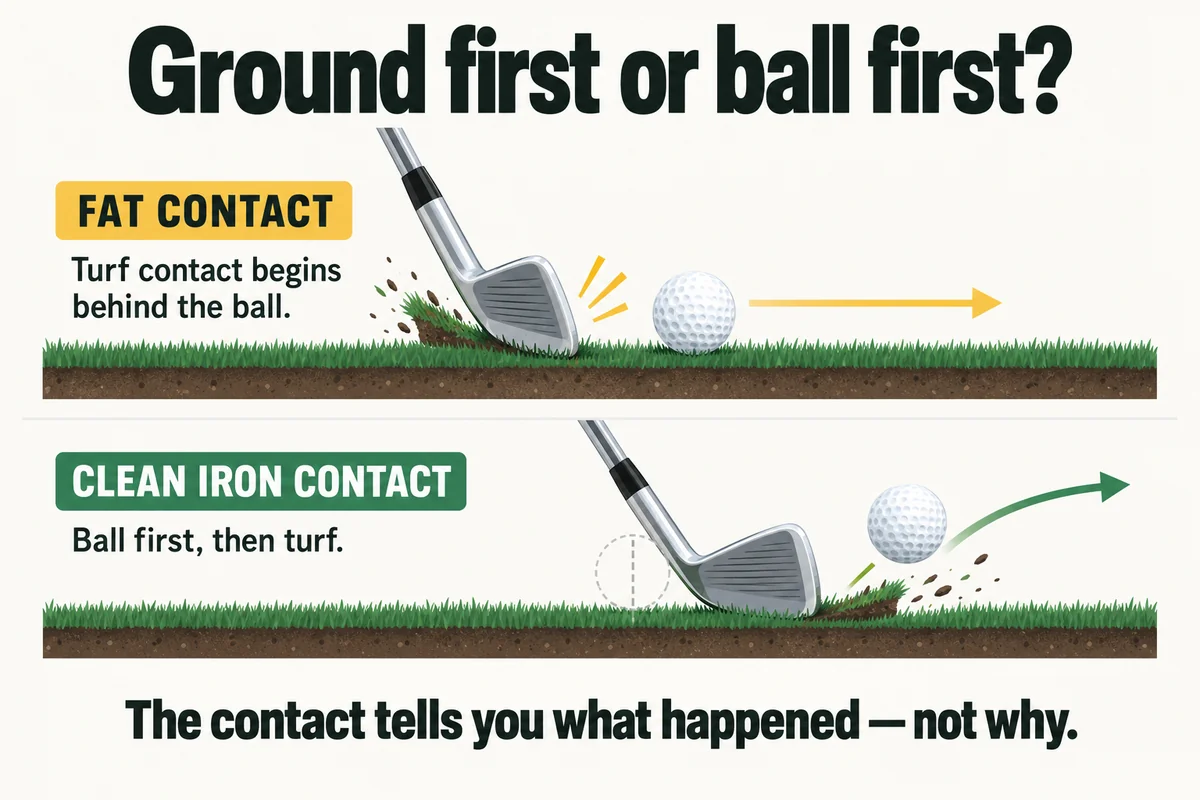
A fat shot happens when the club strikes the ground before making clean contact with the ball. The club loses speed in the turf, which often leaves you with a heavy strike and a shot that travels less distance than expected.
One common explanation is that the club's low point — the lowest point reached by the clubhead — is too far behind the ball. But that describes the contact pattern, not necessarily the underlying cause.
Ball position, movement through the swing and consistency of contact can all play a part. Before trying to fix your technique, it helps to look at where the club is contacting the ground and whether the same pattern keeps appearing.
Why Fat Shots Aren't Always Caused by the Same Thing
When you hit the ground before the ball, it's tempting to reach for an immediate fix. Move the ball back. Shift your weight forward. Keep your head down. Change the way you start the downswing.
Some of those adjustments might help a particular golfer. But the fact that you've hit a fat shot doesn't automatically tell you which one you need.
The shot tells you something important about the contact: the club reached the ground too early. It doesn't give you a complete explanation of why that happened.
Your low point may be too far back
The low point is the lowest point of the clubhead's arc during the swing. With a well-struck iron shot, the club generally contacts the ball before reaching the ground. If the club reaches the turf behind the ball, the ground can slow it down before impact.
That explains the contact pattern. The next question is what is causing your low point to occur there. You can't answer that from the result of one shot alone.
Your movement may be inconsistent
Where the club reaches the ground can change when your movement, balance or delivery varies from swing to swing. The important point isn't to assume that one particular movement is wrong. It's to notice whether the contact pattern is repeating and, if possible, get a clearer view of what's happening.
Your setup may be part of the picture
Ball position affects where the club meets the ball in relation to the swing arc. The lie and the ground conditions can also affect what a strike feels like. These are worth checking, but moving the ball around without understanding the pattern can make it harder to tell what has actually changed.
A fat shot is evidence of where the club contacted the ground. It isn't proof that you need to make one specific swing change.
If you want the definition on its own, our golf glossary explanation of a fat shot covers the term. The useful next step is to look for a pattern in your own contact.
What Should You Look at When You Hit Fat Shots?
Before trying to change your swing, gather a little more information. You're not trying to diagnose everything at once. You're trying to work out whether there's a repeatable pattern worth investigating.
Where Did the Club Hit the Ground?
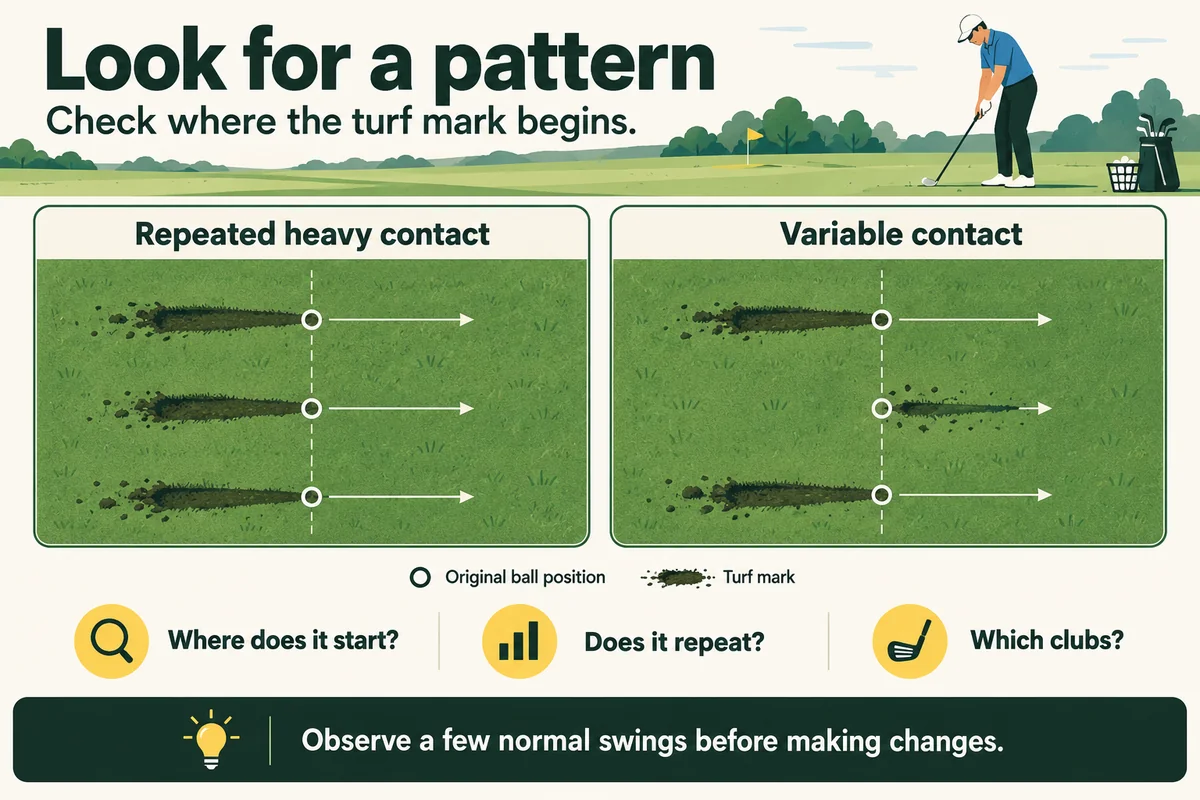
If you can see the turf mark, notice where it begins in relation to where the ball was sitting. A mark that starts behind the ball can help confirm that the club reached the ground too early. The size of a divot on its own doesn't tell the whole story.
Does It Happen Repeatedly?
One heavy strike can happen without revealing a consistent fault. Several similar strikes are more useful because they give you a pattern to investigate. Notice whether the contact is consistently heavy or varies from shot to shot.
Does It Happen With Particular Clubs?
Pay attention to whether the problem appears with one club, several irons or your wedges as well. That information doesn't diagnose the cause by itself, but it helps describe the problem more clearly.
What Does the Ball Do?
A fat shot often loses distance because the club has struck the ground before the ball. Notice whether the ball comes out weakly or finishes well short of your usual distance. Consider the ball flight alongside the turf contact rather than relying on either clue alone.
These observations are more useful than immediately trying three different fixes. They give you a clearer starting point, whether you investigate it yourself or ask a golf coach to take a look.
How to Check Your Contact Without Changing Everything
The aim of this exercise is to observe your usual contact, not to force a different swing. If you have access to a grass practice area, the turf can give you useful feedback. Follow the facility's rules about taking divots.
First, find out what the club is doing. Then decide what needs attention.
Choose a Comfortable Iron
Use an iron you can hit comfortably. Start with a normal, controlled shot rather than trying to hit the ball harder or deliberately change your technique.
Make a Few Normal Swings
Give yourself enough space between shots to reset. The point is to see what your usual swing produces, not to turn every attempt into a technical experiment.
Observe the Strike and the Turf
Notice whether the club reaches the ground before the ball and, when the turf mark is visible, where that mark begins relative to the ball. Also notice whether the strike feels heavy and the ball loses distance.
Look for a Pattern Before Changing Anything
After a few shots, ask whether the same contact problem keeps appearing. If it does, you've got something more useful to investigate than a single poor result. If the contact varies, that is useful information too.
Our guide to understanding low point in golf explains the concept behind where the club reaches the ground.
Keep the test simple. Observe the contact; don't turn the next shot into a list of swing instructions.
Don't Turn Every Fat Shot Into a Swing Rebuild
A fat shot can make you feel as though something has gone badly wrong with your swing. The natural reaction is to start correcting things immediately.
But changing your ball position, movement, posture and swing path all at once makes it difficult to tell what helped — or whether the original problem was even caused by those things.
Start with what you can observe. Is the club repeatedly reaching the ground behind the ball? Does it happen with one club or several? Is the contact consistent, or does it vary?
If the pattern persists and you're not sure why, a golf coach can help you see what is happening rather than having to guess from the ball flight alone.
You don't need to solve your whole swing after one poor shot. You need a clearer idea of what the shot is telling you.
And remember that a fat shot and a thin shot describe different kinds of contact. If both appear in your game, don't assume that you need two unrelated fixes. The position of the club's low point may be a useful place to begin investigating the pattern.
The aim isn't to ignore the problem. It's to avoid making changes before you understand it.
Understand the Contact Before You Chase a Fix
A fat shot means the club has reached the ground before making clean contact with the ball. The low point of the swing helps explain that contact, but it doesn't automatically reveal why it happened.
Pay attention to where the club meets the ground, whether the pattern repeats and which clubs are affected. Those observations give you a more useful starting point than trying to change several things at once.
Notice the pattern, understand the contact, and make your next change for a reason — not just because one shot went wrong.
Looking for something else?
Search A BETTER ROUND for another golf problem, question or idea.
Can’t find what you’re looking for? Have a golf question? Ask ABR →